
Article Summary: In modern chain manufacturing, precision, efficiency, and consistency determine product quality and profitability. A Double Head Plate Rolling Mill plays a critical role in shaping chain plates with high accuracy while improving throughput and reducing production costs. This comprehensive guide explores working principles, advantages, applications, technical considerations, maintenance practices, and why ALPHA solutions are widely trusted by manufacturers seeking reliable plate rolling performance.
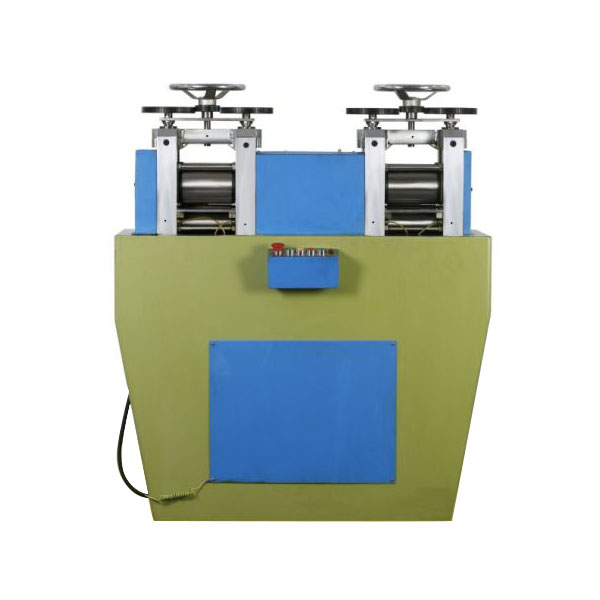
A Double Head Plate Rolling Mill is a specialized forming machine designed to process metal plates used in chain production and other industrial manufacturing sectors. Unlike traditional single-head systems, a Double Head Plate Rolling Mill incorporates two synchronized rolling heads that perform rolling operations simultaneously or sequentially depending on production requirements.
The primary purpose of the equipment is to achieve highly accurate plate deformation while maintaining dimensional consistency. Manufacturers rely on this technology when producing chain components that require tight tolerances, uniform geometry, and repeatable quality.
As production volumes continue to increase globally, manufacturers seek equipment that can deliver faster processing without sacrificing precision. This is where the Double Head Plate Rolling Mill becomes an essential investment.
The operating principle is based on controlled rolling pressure applied through two independent rolling heads. Raw plate materials enter the machine and are positioned precisely through feeding mechanisms. The rolling heads then apply carefully controlled force to shape the material according to production specifications.
The process generally involves:
Because two rolling stations work together, production efficiency can increase significantly compared with traditional equipment. This dual-action design also helps distribute processing loads more evenly, contributing to machine longevity and stable output quality.
The popularity of the Double Head Plate Rolling Mill is driven by several important advantages.
Two rolling heads allow more work to be completed during each production cycle. This reduces bottlenecks and increases throughput.
Uniform pressure distribution ensures each plate receives identical processing conditions, resulting in consistent dimensions and superior product quality.
Modern systems feature automation capabilities that reduce manual intervention and improve operational reliability.
Although the initial investment may be higher than conventional equipment, long-term productivity gains often produce a strong return on investment.
The dual-head structure distributes workload more effectively, minimizing stress concentration and extending equipment life.
Many manufacturers upgrading their facilities compare a Double Head Plate Rolling Mill with traditional rolling systems.
Conventional mills can perform adequately for lower production volumes, but limitations become evident as demand increases. Single-head systems often require additional production time, greater operator involvement, and more frequent adjustments.
In contrast, a Double Head Plate Rolling Mill offers greater automation, higher precision, and improved production efficiency. For manufacturers seeking scalable growth, the dual-head design provides a clear operational advantage.
Another important distinction is process consistency. With advanced control systems, rolling parameters can be maintained within strict limits, ensuring repeatable results throughout extended production runs.
The Double Head Plate Rolling Mill serves a variety of industries where precision metal forming is essential.
Chain manufacturers especially benefit because plate geometry directly affects chain strength, durability, and operational reliability.
When chain plates are rolled with greater consistency, assembly becomes easier and final products exhibit superior performance characteristics.
When evaluating a Double Head Plate Rolling Mill, manufacturers should focus on several critical technical characteristics.
Precision is often the most important consideration. High rolling accuracy minimizes variation and reduces downstream corrections.
Advanced automation reduces labor requirements while improving repeatability.
Modern digital controls enable operators to manage production parameters efficiently and maintain process stability.
A robust frame structure helps maintain alignment under heavy operating loads.
The machine should match current production requirements while supporting future growth.
Easy maintenance reduces downtime and contributes to lower operating costs.
| Feature | Conventional Rolling Mill | Double Head Plate Rolling Mill |
|---|---|---|
| Rolling Stations | Single Head | Dual Head |
| Production Efficiency | Moderate | High |
| Dimensional Consistency | Good | Excellent |
| Automation Potential | Limited | Advanced |
| Labor Requirement | Higher | Lower |
| Output Stability | Variable | Highly Stable |
| Scalability | Moderate | Excellent |
Quality improvement is one of the strongest arguments for investing in a Double Head Plate Rolling Mill.
Every manufacturing process introduces variation. The objective of advanced equipment is to minimize that variation and ensure consistent output. The dual-head design supports this objective by applying controlled rolling forces more uniformly.
Benefits include:
For chain manufacturers, even small dimensional deviations can influence strength, wear resistance, and service life. Therefore, precision rolling directly contributes to customer satisfaction and product reliability.
Many manufacturers report measurable improvements in production efficiency after implementing advanced rolling technologies. Consistency not only reduces scrap but also simplifies downstream assembly processes.
Proper maintenance is essential for maximizing the value of a Double Head Plate Rolling Mill.
Operators should inspect rolling surfaces, lubrication systems, and feeding mechanisms before production begins.
Correct lubrication reduces wear and helps maintain operational efficiency.
Regular alignment checks ensure rolling accuracy remains within specification.
Software diagnostics can identify potential issues before they develop into costly failures.
Routine maintenance plans help avoid unexpected downtime and extend machine lifespan.
Companies that implement preventive maintenance strategies often experience lower operating costs and greater production reliability over time.
Selecting the right Double Head Plate Rolling Mill requires a careful evaluation of business objectives and technical requirements.
Decision makers should consider:
Another important factor is supplier capability. A machine is only as valuable as the support behind it. Manufacturers should evaluate engineering expertise, technical service, spare parts availability, and long-term support commitments.
ALPHA has built a strong reputation by providing specialized chain-making equipment designed to support precision manufacturing and long-term operational performance.
When assessing suppliers, request detailed technical documentation, application references, installation support information, and after-sales service capabilities.
Manufacturing technology continues to evolve rapidly. The future of the Double Head Plate Rolling Mill will likely be shaped by automation, digitalization, and intelligent production systems.
Several trends are emerging:
As Industry 4.0 adoption expands, manufacturers increasingly seek equipment capable of providing real-time production insights. Advanced rolling mills are expected to become more interconnected, enabling continuous performance optimization.
Environmental sustainability is another key consideration. Future systems will likely focus on reducing energy consumption while maintaining high productivity standards.
For businesses planning long-term growth, investing in advanced rolling technologies today can provide a competitive foundation for tomorrow's manufacturing environment.
The primary advantage is its ability to combine high production efficiency with exceptional rolling consistency through dual-head processing technology.
Yes. It is specifically designed to support high-volume manufacturing environments that require consistent quality and reliable throughput.
Modern systems often support advanced automation features, including automatic feeding, parameter control, and production monitoring.
By maintaining consistent rolling pressure and precise dimensional control, the machine reduces variation and improves overall product consistency.
Industrial chain manufacturing, conveyor systems, agricultural equipment production, automotive components, and engineering hardware manufacturing are among the most common applications.
ALPHA focuses on specialized chain manufacturing machinery, providing reliable equipment, engineering expertise, and professional technical support for customers worldwide.
A high-performance Double Head Plate Rolling Mill can significantly improve manufacturing efficiency, product consistency, and long-term profitability. Whether you are expanding an existing chain production line or building a new facility, selecting the right equipment partner is critical to success.
ALPHA is committed to delivering advanced chain manufacturing solutions that help businesses achieve higher productivity and superior product quality. If you would like to learn more about our Double Head Plate Rolling Mill solutions, technical specifications, customization options, installation support, or after-sales services, contact us today. Our experienced team is ready to help you find the ideal solution for your manufacturing requirements and future growth goals.


