
Article Summary: A Diode Laser Welding Machine can provide a precise, efficient, and low-consumption solution for demanding metal-processing applications. This guide explains how diode laser welding works, its key advantages, technical specifications, applications, and purchasing considerations, with a focus on jewelry manufacturing and precision metal welding.
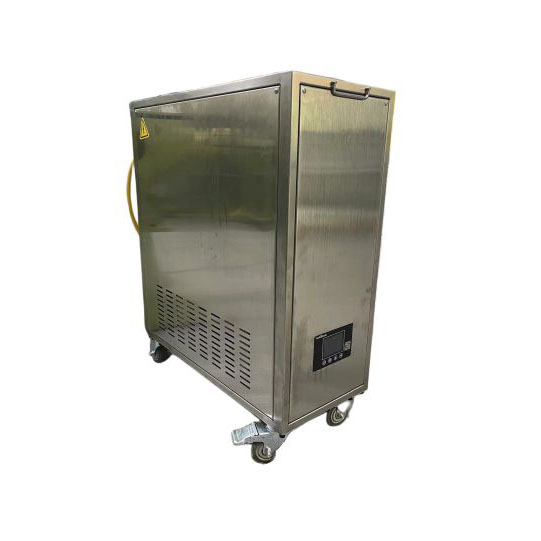
For manufacturers looking for accurate and efficient metal joining, the Diode Laser Welding Machine from ALPHA TECHNOLOGIES provides a specialized solution for precision welding applications. ALPHA has extensive experience in jewelry equipment and supplies laser welding equipment designed to support applications where controlled heat input, accurate positioning, and clean weld results are important.
Unlike conventional welding methods that may require electrodes or introduce greater mechanical or thermal influence, laser welding uses a concentrated beam of light to deliver energy directly to the target area. This makes the process particularly useful when manufacturers need to work with small components, delicate metal parts, or closely positioned areas.
ALPHA's diode laser welding solution features a highly uniform laser beam and a narrow wavelength distribution. According to the manufacturer's product information, these characteristics contribute to stable optical performance and controlled material processing. The machine is also positioned for applications involving various metals, including jewelry-related manufacturing and repair work.
A diode laser welding system converts electrical energy into laser energy and directs the resulting beam toward a specific area of the workpiece. The concentrated energy heats the material locally until the required portion melts. After cooling and solidification, the joined area forms a weld.
The controlled nature of the laser beam is one of the major reasons laser welding is valuable for precision manufacturing. Instead of heating a large surrounding area, the process can concentrate energy on a relatively small target.
The wavelength characteristics of the laser are also important because different materials absorb laser energy differently. ALPHA notes that the monochromaticity of its diode laser can help control absorption depth and distribution during material processing.
When selecting welding equipment, manufacturers typically evaluate precision, productivity, operating cost, weld appearance, and material compatibility. A diode laser welding system can offer advantages in several of these areas.
Laser energy can be concentrated into a small working area, making it suitable for precision components and detailed metalwork. This is especially valuable in jewelry production, where excessive heat or inaccurate welding can affect the appearance and dimensional quality of a finished product.
ALPHA specifies that its Diode Laser Welding Machine can produce beautiful welds with minimal spillage. For manufacturers producing visible metal products, reduced weld material and controlled heat input can help minimize post-processing requirements.
Low power consumption is another stated feature of the machine. By directing energy toward the specific welding area rather than broadly heating the workpiece, laser processing can support efficient production when properly configured.
The machine is designed for applications involving different metals. However, actual welding parameters should always be determined according to the specific alloy, thickness, joint configuration, surface condition, and desired weld quality.
Laser welding does not rely on a conventional electrode physically contacting the workpiece. This can reduce concerns associated with electrode wear or electrode contamination in suitable applications.
Technical specifications are essential when comparing laser welding equipment. ALPHA's published specifications provide a useful reference point for evaluating the machine's electrical requirements, footprint, and weight.
| Parameter | ALPHA Diode Laser Welding Machine | Why It Matters |
|---|---|---|
| Input Voltage | 220V | Determines electrical installation requirements |
| Average Power | 1000W | Provides a reference for laser system power capacity |
| Machine Size | 68 × 26 × 79 cm | Helps determine workshop and installation space |
| Net Weight | 90 kg | Important for transportation and equipment placement |
These specifications are published by ALPHA for the referenced model. Buyers should confirm the latest configuration, optional equipment, electrical requirements, and application-specific parameters with the manufacturer before placing an order.
Laser welding is particularly useful when the production process requires accurate, localized energy delivery. ALPHA positions its laser equipment primarily within the jewelry equipment sector, while its product description identifies applications involving various metals.
Typical application scenarios can include:
ALPHA's broader laser-machine information specifically describes laser equipment as suitable for repairing holes, sand holes, and spot-welding gold and silver jewelry.
For manufacturers considering equipment for a particular alloy or component, a practical approach is to provide the supplier with sample materials, material thickness, joint design, production volume, and required weld appearance. This allows the welding solution to be evaluated against the actual production requirements rather than relying only on nominal machine specifications.
Choosing a laser welding machine should involve more than comparing advertised power or purchase price. A suitable system needs to match the actual manufacturing process.
Different metals and alloys have different optical and thermal characteristics. Confirm whether the machine has been tested for the specific materials you intend to weld.
For jewelry and miniature components, beam quality, optical stability, positioning accuracy, and operator control can be more important than simply selecting a higher-power system.
Analyze daily production volume, operating hours, component dimensions, weld locations, and the number of different products. A machine used for repair work may have different requirements from equipment integrated into continuous manufacturing.
Electrical specifications, machine dimensions, ventilation, workspace arrangement, safety provisions, and operator access should all be considered before installation.
After-sales technical assistance can significantly influence long-term equipment value. ALPHA states that its laser machines are sold internationally and that technical support is available for customers.
Instead of focusing only on the initial machine price, consider:
This broader evaluation can help purchasing teams determine whether a China Diode Laser Welding Machine manufacturer or supplier can provide the technical and commercial value required for their production environment.
It is used for precision welding and localized metal processing. ALPHA focuses its laser equipment on jewelry manufacturing and related applications, including welding and repair of metal jewelry components.
The published technical specification lists an average power of 1000W, with an input voltage of 220V.
Yes. ALPHA states that the machine is suitable for various metals. However, the appropriate welding parameters depend on the material, thickness, joint design, and required finish, so application testing is recommended before production.
The published machine dimensions are approximately 68 cm × 26 cm × 79 cm, with a net weight of approximately 90 kg.
A uniform beam can contribute to consistent energy distribution across the working area. ALPHA highlights high laser-beam uniformity and narrow wavelength distribution as characteristics of its diode laser welding system.
A well-selected Diode Laser Welding Machine can provide manufacturers with a combination of precision, efficient energy delivery, attractive weld quality, and flexible metal-processing capability. For jewelry manufacturers and other precision metalworking businesses, the key is to match laser characteristics, machine specifications, material compatibility, and technical support with real production requirements. If you are evaluating a China manufacturer or supplier for your next laser welding project, contact us at ALPHA TECHNOLOGIES to discuss your application, machine configuration, technical requirements, and purchasing needs.


