Inside a cleanroom at a medical device manufacturer, a technician positions a tiny stainless steel component under a microscope. The component is smaller than a grain of rice, with delicate features that must be joined with absolute precision. Traditional welding methods—TIG, MIG, or even resistance welding—would melt the entire piece, distort the geometry, or introduce excessive heat that could damage nearby sensitive elements. Yet, with the push of a button, a focused beam of light delivers precisely the right amount of energy to the exact location, creating a flawless weld with virtually no heat-affected zone. This is the reality of modern micro welding, and it is made possible by advanced laser technology.
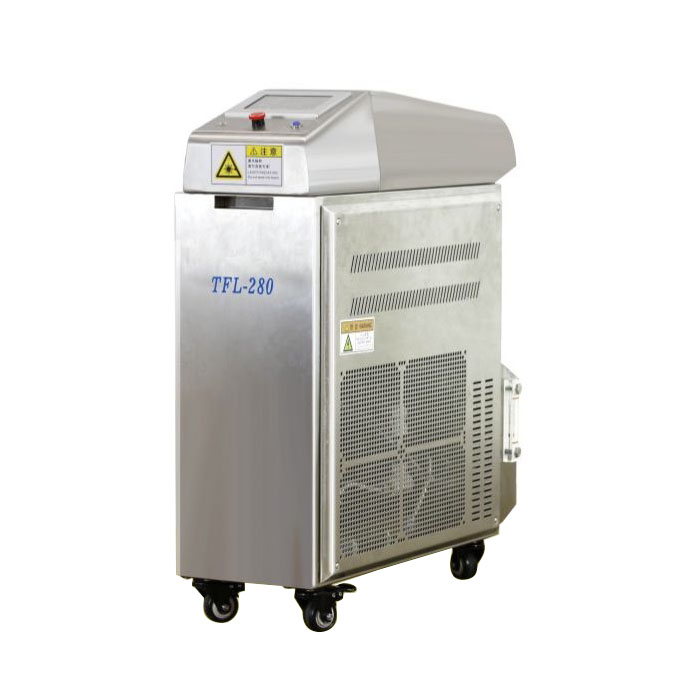
A Laser Machine designed for micro welding is not simply a scaled-down version of industrial laser welders. It is a precision instrument that combines ultra-fine beam focus, precise pulse control, and advanced motion systems to weld components measured in millimeters or even micrometers. The key to its success lies in the physics of laser energy: a highly concentrated beam that can be focused to a spot size of less than 100 micrometers, delivering heat with extraordinary accuracy and minimal thermal spread. This article explores the technical features, operational advantages, and practical applications of Laser Machine in micro welding, revealing why this technology has become indispensable for manufacturers of small, intricate components.
Micro welding is a specialized joining process used to weld components with dimensions typically ranging from a few micrometers to a few millimeters. It is employed in industries where precision, miniaturization, and reliability are paramount: medical devices (such as pacemakers and surgical instruments), electronics (sensor housings, battery tabs, connector pins), and aerospace (micro-sensors and miniature actuators). The challenge of micro welding lies in the fact that the components being joined are extremely small, often fragile, and frequently made of dissimilar materials. The weld itself must be strong, conductive, and hermetically sealed, yet the process must not damage or distort the surrounding material.
The difficulties of micro welding are compounded by the constraints of traditional welding methods. Conventional fusion welding techniques like TIG (Tungsten Inert Gas) or MIG (Metal Inert Gas) rely on an electric arc, which generates a large, diffuse heat zone. This heat spreads through the workpiece, melting not just the target area but also adjacent material. For a miniature component, the heat-affected zone (HAZ) can be larger than the component itself, causing melting, warping, or metallurgical changes in areas that must remain pristine. The arc is also difficult to control precisely, often resulting in inconsistent weld penetration or excessive spatter.
Resistance welding, another common method, uses electrical current to heat the workpiece through contact resistance. While it can be effective for certain applications, it requires physical contact between the electrodes and the workpiece, which can be problematic for fragile components. The electrodes can also cause surface damage or contamination. Furthermore, resistance welding is not well-suited for welding dissimilar metals, which is a common requirement in micro joining. The limitations of these conventional methods have created a clear need for a different approach—one that can deliver precisely controlled energy to a tiny target without disturbing the rest of the component. This is the gap that Laser Machine technology has filled, and it is the reason why laser micro welding has become the standard in many high-precision manufacturing sectors.
The precision of a Laser Machine for micro welding is rooted in its ability to focus light into an extraordinarily small spot. The laser beam is generated in a resonator, then shaped and directed through a series of optical elements. The final focusing lens, typically made of high-quality fused silica or zinc selenide, concentrates the beam to a spot size that can be as small as 20 micrometers (0.02 mm) in diameter. This is less than the thickness of a human hair. The small spot size means that the laser energy is delivered to an area that is precisely matched to the size of the weld, minimizing collateral heating and focusing the energy exactly where it is needed.
Beyond the spot size, the laser's pulse duration is also critical. In micro welding, the Laser Machine typically operates in pulsed mode. The pulse duration—the length of time the laser is on—can be as short as a few nanoseconds, microseconds, or milliseconds, depending on the material and the application. A short pulse duration minimizes the time for heat to diffuse away from the weld zone, effectively "trapping" the heat in the weld area and reducing the heat-affected zone. This is why pulsed lasers are preferred for micro welding of heat-sensitive materials, such as thin foils or components near electronics. The ability to control the pulse energy and duration independently allows the operator to tailor the weld profile for each specific application, ensuring that the joint is strong and reliable without damaging the surrounding area.
Another key factor in precision is the beam delivery system. Modern Laser Machine for micro welding incorporate galvanometer scanners that direct the laser beam with exceptional speed and accuracy. The scanners allow the beam to be positioned to within a few micrometers, enabling complex weld patterns and the welding of components that are tightly packed together. This precision is further enhanced by integrated vision systems that identify the weld location, compensate for part tolerances, and align the beam to the exact target. At Shenzhen Alpha Tech Co., Ltd., we have developed a range of Laser Machine that combine these precision components into integrated micro-welding systems, providing our customers with the highest level of accuracy and repeatability.
The following table summarizes the key precision features of a micro welding Laser Machine.
| Feature | Specification | Impact on Precision |
| Laser Spot Size | 20 - 100 µm (adjustable) | Precise targeting of tiny weld areas |
| Pulse Duration | ns to ms range | Controls heat diffusion, minimizes HAZ |
| Beam Positioning Accuracy | +/- 2 µm | Accurate placement of weld seam |
| Galvanometer Scanner | High-speed, high-precision | Fast and accurate beam movement |
| Vision System | Integrated CCD camera | Automatic recognition and alignment |
The combination of these precision features allows Laser Machine to perform micro welding tasks that are simply impossible with conventional methods. The result is a reliable, repeatable, and high-quality weld in the smallest of components, opening new possibilities in product design and manufacturing.
The challenge of heat management is the greatest obstacle to successful micro welding. Excessive heat can melt solder joints, damage adjacent electronic components, cause material distortion, or create internal stresses that lead to cracking. A Laser Machine addresses this challenge through precise heat control, which is achieved through a combination of pulse parameters, beam characteristics, and process monitoring. The core principle is to deliver the required energy for melting in a highly concentrated volume, minimizing the flow of heat into the surrounding material. This is the essence of "low-heat-input welding."
The pulse duration of the Laser Machine plays a central role in heat control. For materials with high thermal conductivity, such as copper or aluminum, a shorter pulse duration is often necessary to minimize the spread of heat. In contrast, materials with lower thermal conductivity may tolerate a longer pulse. The pulse energy and pulse duration are chosen to create a specific energy density at the weld site, which determines the weld penetration depth and width. By carefully selecting these parameters, the operator can optimize the weld profile for the specific material combination and joint design.
Another important heat management strategy is the use of a "keyhole" welding mode. In keyhole welding, the laser beam creates a vapor cavity in the material, which effectively traps the laser energy. This allows the beam to penetrate deeper into the material and creates a weld with a high depth-to-width ratio. The keyhole also acts as a thermal barrier, reducing the heat flow to the surrounding material. This is particularly useful for welding thick sections or materials with high reflectivity. However, keyhole welding requires careful parameter control to avoid defects such as porosity or spatter.
In addition to pulse control, Laser Machine can also be integrated with in-process monitoring systems, which provide real-time feedback on the welding process. These systems can detect variations in the weld pool, monitor the weld penetration depth, and even adjust the laser parameters in real time to maintain optimal weld quality. This is particularly important for micro welding of small components, where a slight variation in the material or the joint geometry can have a significant impact on the weld quality. Our factory at Shenzhen Alpha Tech Co., Ltd. offers Laser Machine equipped with these advanced monitoring and control systems.
The table below illustrates the heat control parameters for different micro welding applications.
| Parameter | Thin Foil (0.1mm) | Small Wire (0.5mm) | Precision Components |
| Laser Power (W) | 20-50 | 50-100 | 100-200 |
| Pulse Duration (ms) | 0.5-2 | 1-5 | 2-8 |
| Spot Size (µm) | 30-50 | 50-80 | 80-120 |
| Heat-Affected Zone | Minimal (< 0.5mm) | Small (< 1mm) | Controlled (1-2mm) |
| Keyhole Mode | Not typically used | Optional | Often used |
By controlling these parameters, a Laser Machine can effectively minimize the heat-affected zone, prevent thermal damage to sensitive components, and deliver a weld that is both strong and reliable. This is why laser micro welding has become the standard for high-precision manufacturing in electronics, medical devices, and aerospace.
Not all Laser Machine are created equal, and the choice of laser source for micro welding is a critical decision that affects the welding quality, efficiency, and cost. The three primary laser types used for micro welding are: Nd:YAG (solid-state), fiber lasers, and diode-pumped solid-state lasers (DPSS). Each has its own unique characteristics and is suitable for specific applications.
Nd:YAG lasers have been a workhorse in the laser welding industry for decades. They are versatile and capable of welding a wide range of materials. The Nd:YAG laser produces a wavelength of 1064 nm, which is well-absorbed by many metals. They can be operated in pulsed mode, offering good control over the pulse energy and duration. However, Nd:YAG lasers are relatively large and expensive and require regular maintenance of the flash lamps.
Fiber lasers are becoming increasingly popular for micro welding. They offer several advantages over Nd:YAG lasers: they are more efficient, more compact, and require less maintenance. The fiber laser also produces a beam with a very high beam quality, which allows it to be focused to a smaller spot size, enhancing precision. Fiber lasers are also available in a wider range of power levels, from a few watts to several kilowatts, making them suitable for a variety of micro welding applications. Their high efficiency and low operating costs make them a very attractive option for manufacturers.
DPSS lasers are another option for micro welding. They combine the benefits of solid-state and diode-pumped technology, offering high efficiency and excellent beam quality. They are available in a range of wavelengths, including green (532 nm) and ultraviolet (355 nm), which can be beneficial for welding certain materials, such as copper or gold. The wavelength of the laser is an important factor because different materials absorb different wavelengths more efficiently. Green lasers, for example, are more effective for welding highly reflective metals like copper and gold. The following table provides a comparison of the three laser types.
| Laser Type | Wavelength | Beam Quality | Efficiency | Typical Applications |
| Nd:YAG | 1064 nm | Good | Moderate | General-purpose, thick sections |
| Fiber Laser | 1064-1070 nm | Excellent | High | Precision welding, automation |
| DPSS Green | 532 nm | Excellent | High | Copper, gold, and aluminum |
| DPSS UV | 355 nm | Excellent | Moderate | Sensitive materials, polymer welding |
Each of these Laser Machine types has its strengths and weaknesses, and the optimal choice depends on the specific materials, joint geometry, and production volume of the application. At Shenzhen Alpha Tech Co., Ltd., we offer a comprehensive range of Laser Machine solutions, including Nd:YAG, fiber, and DPSS systems, allowing us to match the right technology to the application. Our experts can help you select the ideal Laser Machine for your micro welding requirements.
The versatility of Laser Machine technology has led to its adoption in a wide range of micro welding applications across multiple industries. In medical devices, laser micro welding is used to join components of pacemakers, hearing aids, surgical instruments, and other implantable devices. The welding process must be precise, sterile, and produce no contamination. Laser welding is ideal because it can be performed in a cleanroom environment and produces a hermetic seal with high strength and corrosion resistance. A prime example is the welding of titanium and stainless steel components for implantable devices. The low heat input of the Laser Machine ensures that the surrounding tissue will not be damaged during implantation.
In the electronics industry, laser micro welding is used to join connectors, battery tabs, sensor housings, and other miniature components. The small spot size and precise heat control make it possible to weld components with fine pitch leads or near other heat-sensitive components. For example, in the manufacture of lithium-ion batteries, laser welding is used to connect the battery tabs to the cell terminals. The high precision ensures that the weld does not damage the cell's internal structure, maintaining battery performance and safety. In aerospace, laser micro welding is used to assemble miniature sensors, fuel injection components, and other precision parts. The reliability of the weld is critical for performance and safety.
Another significant application is in the field of electronics packaging. Micro-welding is used to hermetically seal packages for sensors, MEMS devices, and other electronic components. The Laser Machine provides a clean, reliable seal that protects the internal components from moisture, dust, and other contaminants. The use of laser welding in electronics packaging has allowed manufacturers to create smaller, more reliable, and more environmentally robust devices. In the jewelry industry, laser welding is used for delicate repair work and for creating intricate designs. The precise heat control and small spot size allow for repairs that are virtually invisible, restoring the original appearance of the jewelry.
The table below provides a summary of the key applications of Laser Machine in micro welding.
| Industry | Typical Applications | Materials | Key Benefits |
| Medical Devices | Pacemakers, surgical tools, implants | Titanium, stainless steel, platinum | Hermetic seal, minimal heat damage |
| Electronics | Battery tabs, sensors, connectors | Copper, aluminum, brass | Precision, small spot size, high speed |
| Aerospace | Sensors, fuel systems, actuators | Inconel, titanium, aluminum | Reliability, strength, lightweight |
| Jewelry | Repairs, intricate designs | Gold, silver, platinum | Precision, minimal melting, aesthetic finish |
| Packaging | Hermetic sealing, MEMS devices | Stainless steel, Kovar | Clean, contamination-free, reliable |
Choosing the right Laser Machine for micro welding requires a careful evaluation of several technical specifications. The most important parameters include: laser power, pulse duration, pulse energy, wavelength, beam quality (M² factor), and the focusing optics. Laser power determines the maximum energy output, but for micro welding, it is the pulse energy and duration that are often more relevant. Pulse energy, measured in Joules (J), is the total energy in each pulse. Pulse duration, measured in nanoseconds or microseconds, determines how long the energy is applied. A combination of high pulse energy and short pulse duration is often used for deep penetration welding, while lower pulse energy and longer pulse duration are used for surface welding or welding of heat-sensitive materials.
Beam quality, quantified by the M² factor, is a measure of how well the laser beam can be focused. A lower M² value indicates a higher beam quality, which allows the beam to be focused to a smaller spot size. This is critical for micro welding, where the spot size determines the precision of the weld. The M² factor for a good quality laser should be less than 1.2. The focusing optics also play a critical role in spot size. A high-quality focusing lens with a long focal length can produce a small spot size at a workable distance from the workpiece.
The wavelength of the laser is another important factor. For metals, the near-infrared (1064 nm) is generally well absorbed, but for highly reflective metals like copper or gold, a green laser (532 nm) may be more effective. The wavelength also affects the penetration depth, with near-infrared lasers typically penetrating deeper than shorter wavelengths. The optical delivery system is also an important consideration. For micro welding, a system that allows precise focusing and easy access to the workpiece is essential. A built-in camera system for observation and alignment is also highly beneficial for micro welding applications.
The following table summarizes the key technical specifications for a micro welding Laser Machine.
| Specification | Typical Value | Why It Matters |
| Laser Power | 50 - 500 W | Determines overall welding capability |
| Pulse Energy | 0.1 - 50 J | Controls weld penetration |
| Pulse Duration | 0.1 - 20 ms | Controls heat-affected zone |
| M² Beam Quality | 1.2 - 1.6 | Determines minimum spot size |
| Wavelength | 532 nm, 1064 nm | Material absorption efficiency |
| Spot Size | 20 - 200 µm | Defines weld precision |
| Cooling System | Water or air | Maintains stable operation |
At Alpha Tech we provide a range of Laser Machine that are optimized for micro welding. Our machines are equipped with high-quality focusing optics, precision motion systems, and integrated vision systems to ensure the highest level of accuracy and repeatability. We also provide comprehensive training and support to help our customers get the most out of their Laser Machine investment.
Question 1: Can a Laser Machine weld dissimilar metals?
Answer: Yes, laser micro welding is particularly well-suited for welding dissimilar metals. The concentrated heat source and precise energy delivery allow for the creation of a metallurgical bond between different alloys without excessive intermetallic compound formation. This is a significant advantage over conventional welding methods, which often struggle with dissimilar metals. The key to successful dissimilar welding is selecting the appropriate laser parameters, including pulse duration, energy, and wavelength, to optimize the weld pool dynamics. Our factory at Shenzhen Alpha Tech Co., Ltd. has extensive experience in welding various material combinations.
Question 2: How small of a spot size can a laser machine achieve for micro welding?
Answer: With the right optics and beam quality, a Laser Machine can achieve a spot size of 20 micrometers (0.02 mm) or even smaller. This is achieved by using a high-quality focusing lens and a beam with a low M² factor. The spot size is critical for micro welding because it determines the precision of the weld and the ability to weld in tight spaces. Smaller spot sizes also minimize the heat-affected zone, reducing the risk of thermal damage. Our Laser Machine systems are designed to achieve the smallest possible spot size for the highest precision.
Question 3: Is laser micro welding a contactless process?
Answer: Yes, laser micro welding is a completely contactless process. The laser beam delivers energy to the workpiece without any physical contact. This is a significant advantage over resistance welding, which requires electrode contact and can cause surface damage. The contactless nature of laser welding also makes it ideal for welding delicate or contamination-sensitive components, such as those used in medical devices or electronics. The absence of physical contact also eliminates the risk of tool wear, ensuring consistent weld quality over time.
Question 4: How does laser micro welding compare to soldering for small components?
Answer: Laser micro welding offers several advantages over soldering for joining small components. Welding creates a metallurgical bond between the base materials, resulting in a joint that is stronger and more durable than a soldered joint. The welded joint is also more resistant to thermal cycling and vibration. In addition, laser welding does not require a filler material, which eliminates the risk of solder bridging or contamination. For applications where joint strength and reliability are critical, laser welding is generally the preferred method.
Question 5: What is the typical welding speed for laser micro welding?
Answer: The welding speed for laser micro welding depends on the material, thickness, and joint design. For small spot welds, the cycle time can be as low as a few milliseconds per weld. For seam welding, the speed can vary from 10 to 100 mm per second. The high speed of laser micro welding contributes to its efficiency and makes it suitable for high-volume production. Our factory at Shenzhen Alpha Tech Co., Ltd. can provide guidance on optimizing welding speed for your specific application.
Laser Machine technology has revolutionized the field of micro welding, offering a level of precision, heat control, and versatility that is unmatched by conventional methods. The ability to focus energy into a tiny spot, control the heat input, and weld dissimilar materials without damaging sensitive components has made laser micro welding the preferred method for manufacturing small, intricate components in the medical, electronics, aerospace, and jewelry industries. The precision of the Laser Machine enables new product designs and manufacturing processes that were previously impossible, driving innovation and efficiency.
Selecting the right Laser Machine for micro welding requires careful consideration of the application, the materials, and the desired production volume. The key specifications—laser power, pulse duration, beam quality, and wavelength—must be matched to the specific requirements of the welding task. At Shenzhen Alpha Tech Co., Ltd., we are committed to providing our customers with the highest quality Laser Machine for micro welding applications. Our experienced team can help you select the ideal system for your specific needs, provide comprehensive training and support, and ensure that you get the most out of your investment in laser technology.
Ready to explore the possibilities of laser micro welding for your application? Contact Shenzhen Alpha Tech Co., Ltd. today for a free consultation and quote.